
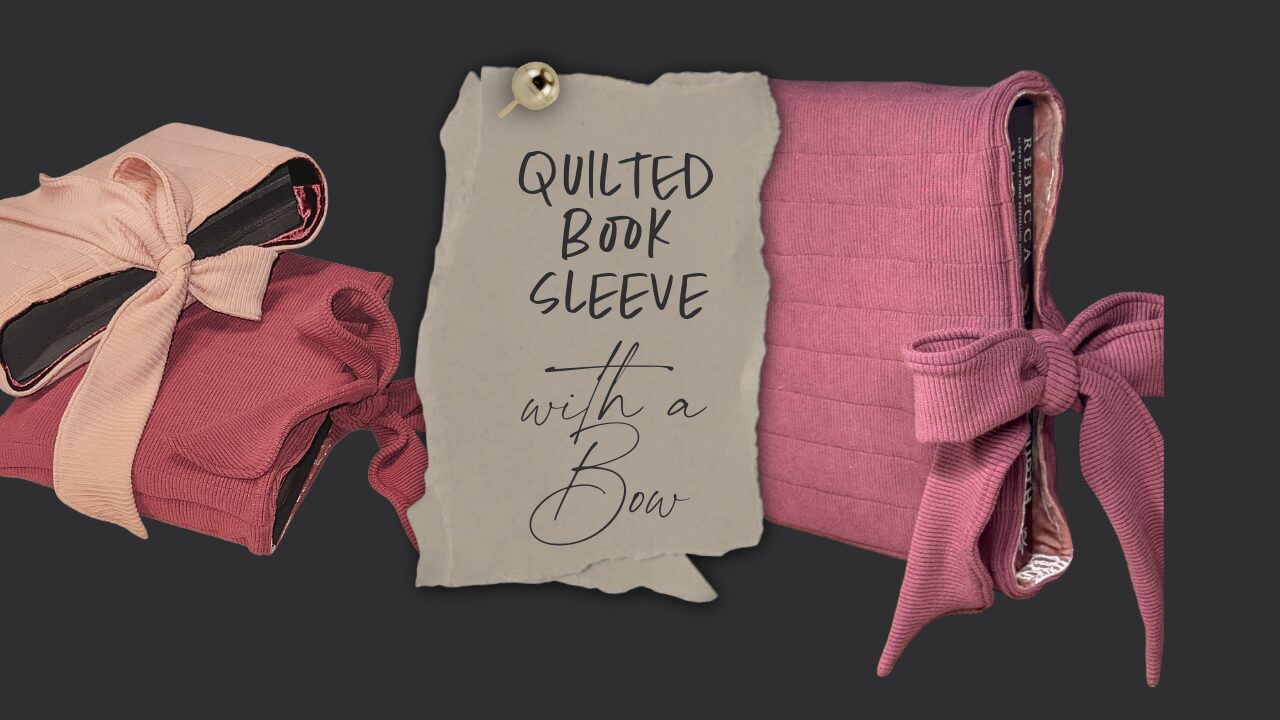
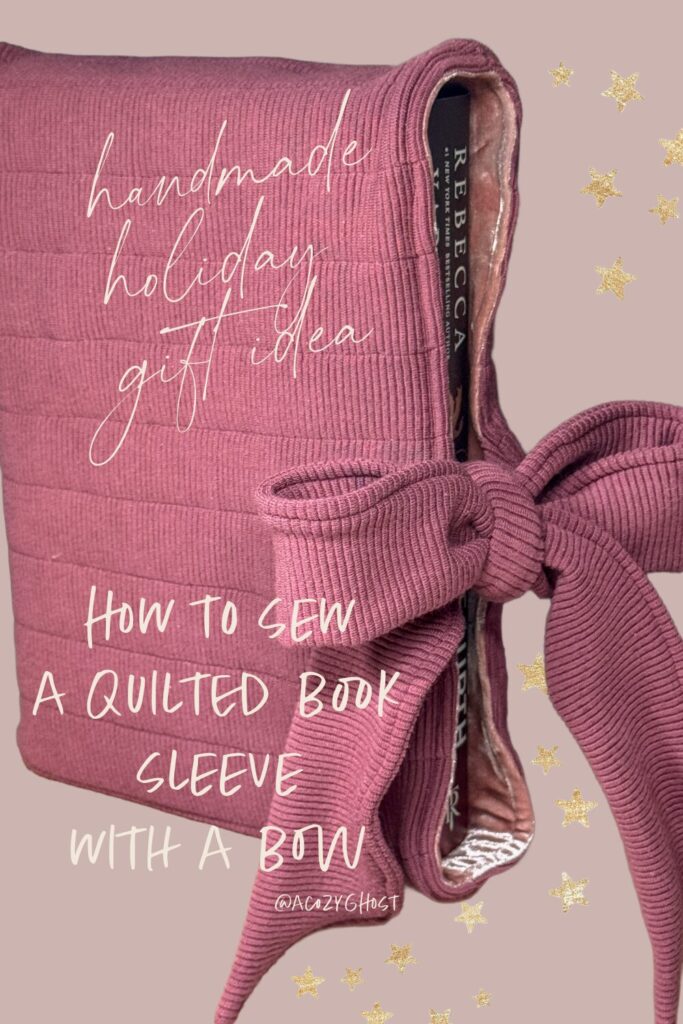
How to Sew A Quilted Book Sleeve with a Bow
Learn how to sew a quilted book sleeve with this step-by-step tutorial; A cozy sewing project for beginners.
This post contains affiliate links. That means I may earn a small commission if you purchase through my Amazon links (or any other affiliate links) at no extra cost to you. Thank you for supporting my blog!
This quilted book sleeve is a simple beginner-friendly sewing project that comes together quickly.
Once you make one, it’s very easy to make several more. I originally made a few of these as Christmas gifts for friends, and they were such a cozy little handmade surprise.
If you prefer to follow along visually, you can watch the full tutorial on YouTube below.
Supplies You’ll Need
- Fabric
- Batting
- Matching thread
- Pins or clips
- Fabric ruler
- Fabric scissors or rotary cutter
- Sewing machine
- Fabric marking tool – (heat erasable pen, chalk, or fabric marker…)
Optional but helpful:
Measurements I Used
- Outer Fabric (2 pieces) – 8.5” x 11”
- Lining Fabric (2 pieces) – 8.5” x 11”
- Batting (2 pieces) – slightly larger than the outer fabric
- Fabric for Bow Ties (2 pieces) – 4.25” x 17.25”
Sewing Along
The full step-by-step construction is shown in the video. I recommend watching once all the way through before sewing, then following along at your own pace.
Step 1: Cut Your Fabric
You can cut your fabric pieces using the measurements provided, or adjust them to fit a specific book. Just keep in mind that the type of fabric you choose can affect the final fit. Stretchy fabrics may allow the sleeve to accommodate slightly larger books, while woven fabrics will hold their shape more firmly.
Cutting the batting slightly larger makes it easier to quilt the outer fabric without worrying about the edges shifting.
Step 2: Quilt the Outer Fabric
Place one piece of outer fabric on top of one piece of batting. Repeat for both outer pieces.
There are many ways you can quilt your fabric here. For this project, I drew vertical quilting lines one inch apart so I would have a guide while sewing.
I chose vertical lines to contrast with the ribbed knit fabric I used, but you can absolutely customize this step. You could try:
- Diagonal quilting
- Wider spacing (2 inches apart)
- Crosshatch quilting
Whatever style you like…
Once your lines are drawn, take your pieces to the sewing machine and stitch along each line.
If you have a quilting foot, you can use it to guide your stitching instead of drawing each quilting line ahead of time.
Tip: If you’re using knit fabric like I did, take your time while quilting since knits can stretch easily.
Sewing With Knit Fabric (Helpful Tip)
For this project I experimented with knit fabric, which I don’t often see used for book sleeves. It actually ended up being one of my favorite versions.
Because knit fabric has stretch, the finished sleeve can hold slightly thicker books than sleeves made from woven fabric.
If you decide to use knit fabric too, make sure you use the correct needle.
I recommend a ballpoint needle. I used size 11/80 but needle size can also vary depending on the weight of the fabric you are using.
Using the wrong needle can cause skipped stitches, which I learned the hard way during this project. If you aren’t sure of what needle size to use, practice stitches on a few pieces of scrap fabric to find what works best.
Step 3: Sew the Outer Sleeve
Place your two quilted outer pieces right sides together.
Clip or pin around three sides of the rectangle, leaving one long edge open.
Sew around the pinned edges using a 1/4 inch seam allowance, and remember to backstitch at the beginning and end.
Once sewn:
- Trim the corners
- Turn the piece right side out
- Push out the corners using a chopstick or turning tool
Set this piece aside.
Step 4: Sew the Lining
Place your two lining pieces right sides together and pin just like you did for the outer sleeve.
However, this time you’ll want to leave a 2 inch gap in the center of one long edge. This opening will allow you to turn the entire project right side out later.
Sew around the edges using a 1/4 inch seam allowance, remembering to backstitch at the beginning and end of each seam.
Step 5: Make the Fabric Ties
Fold each tie right sides together and pin or clip along the long edge.
To create the pointed bow ends:
- Place the tie on a cutting mat.
- Line your ruler diagonally across the last 2 inches of the fabric.
- Cut along that diagonal line.
Repeat on the other tie.
Next, starting at the pointed end:
- Sew along the angled edge and down the longer side
- Leave the top straight edge open for turning
- Sew using a 1/4 inch seam allowance
After sewing:
- Trim the edges
- Turn the tie right side out
- Push out the pointed tip
Optional: You can topstitch around the edges at 1/8 inch seam allowance for a crisp finish.
Step 6: Attach the Ties
Find the center of your outer sleeve (or wherever you’d like the ties placed).
Clip one tie to each side of the sleeve opening, making sure they are aligned evenly across from one another.
The ties should be pointing inward toward the sleeve, since they’ll be turned outward after the final assembly.
Step 7: Assemble the Sleeve
Keep the lining wrong side out.
Slide the outer sleeve (right side out) inside the lining so the right sides are facing each other.
Before sliding everything together fully, guide the ties through the gap you left in the lining so they don’t get caught in the seam.
Line up the edges of:
- Outer sleeve
- Lining
- Fabric ties
Clip or pin everything securely.
Then sew all the way around the top edge using a 1/4 inch seam allowance.
Step 8: Turn the Sleeve
Pull the entire project right side out through the gap in the lining.
Once everything is turned:
- Sew the lining gap closed
- Tuck the lining inside the sleeve
To finish, topstitch around the opening of the book sleeve using a 1/4 inch seam allowance.
This helps keep the lining in place and gives the sleeve a clean finished edge.
Your Cozy Book Sleeve Is Finished
And that’s it. Your quilted book sleeve is complete.
Slide your favorite book inside, tie the bow, and enjoy the tiny moment of comfort that comes from a handmade project.
These are wonderful for:
- protecting books in bags
- gifting to fellow bookworms
- using up small fabric pieces
- sewing in batches for holidays
Once you’ve made one, you’ll likely find yourself making several more.
Share Your Make
If you sew along, I’d love to see it. Feel free to tag me or share your version so we can admire your cozy creation.
Happy sewing,
– A Cozy Ghost
Great content! Keep up the good work!
Thank you! I appreciate the feedback (: